
Six figures on a credit card landing page trigger something almost automatic. "Earn 100,000 bonus points" reads like a jackpot — a big, round, impressive number. But that same headline now shows up across dozens of cards with wildly different annual fees, spending requirements, and point values. The six-figure bonus stopped being a reliable signal of a good deal a while ago.
The Same 100,000 Points Can Be Worth $500 or $1,500
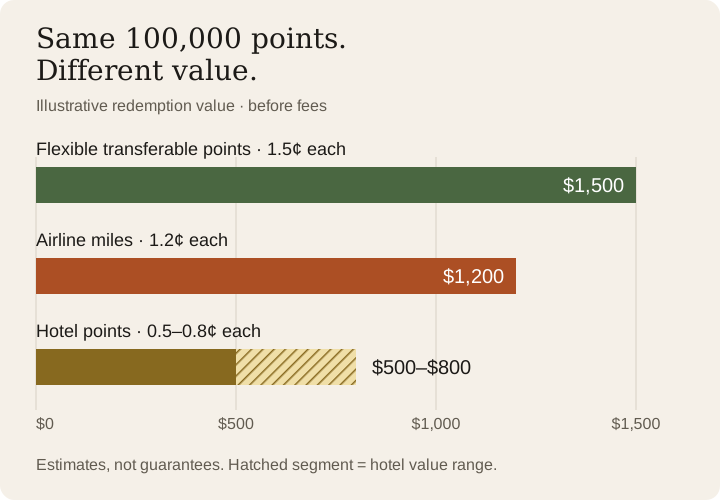
It depends entirely on the currency. Using rough, non-guaranteed valuations common in the points-and-miles community, flexible transferable points run around 1.5¢ each, airline miles around 1.2¢, and hotel points anywhere from 0.5¢ to 0.8¢ depending on the program. Run 100,000 points through each of those and the payout spreads from $500 to $1,500 — before you've even touched an annual fee or a spending requirement.
| Currency type | Value per point | Value of 100,000 points |
|---|---|---|
| Flexible transferable points | ~1.5¢ | ~$1,500 |
| Airline miles | ~1.2¢ | ~$1,200 |
| Hotel points | ~0.5¢–0.8¢ | ~$500–$800 |
Same Headline Number, Two Very Different Offers
Two hypothetical welcome offers make the point. Card A offers 100,000 points after $6,000 in spend within three months, carries a premium annual fee in the $500–$800 range, and its points transfer to a wide range of airline and hotel partners, mostly at a 1:1 ratio — giving the bonus a real-world redemption value in the $1,000–$1,500 range. Card B offers 100,000 miles after $8,000 in spend within six months, with a lower annual fee around $350, but those miles are locked into a single airline's own award chart with no transfer flexibility — putting the realistic redemption value closer to $600–$800.
| Card A | Card B | |
|---|---|---|
| Welcome bonus | 100,000 points | 100,000 miles |
| Spend requirement | $6,000 in 3 months | $8,000 in 6 months |
| Annual fee | $500–$800 | ~$350 |
| Redemption flexibility | Transfers to many airline/hotel partners, mostly 1:1 | Locked to one airline's award chart, no transfers |
| Realistic redemption value | $1,000–$1,500 | $600–$800 |
Same headline number, similar fee-to-bonus ratio on paper — but very different real-world payoffs once you account for flexibility and where you can actually spend the points.
Spending Requirements Change the Efficiency Math Too
A 100,000-point bonus that requires $4,000 in spend delivers 25 bonus points per dollar of required spending. The same bonus tied to a $10,000 requirement drops to 10 points per dollar. If you wouldn't naturally spend that much in the window, the "bigger" bonus can cost you more than it's worth — either in carried balances or in spending you wouldn't have otherwise done.
Annual Fees Decide the First-Year Verdict
A 100,000-point bonus worth $1,000 against a $700 fee is a very different proposition than the same bonus against a $95 fee — even before benefits like lounge access or statement credits enter the picture. And those benefits should only count at the value you'll actually use. A $300 travel credit that forces spending you wouldn't otherwise make isn't really worth $300.
Bigger Numbers Aren't Automatically Better
Seeing 150,000 hotel points or 200,000 airline miles next to a 75,000-point transferable-currency offer can make the larger number look like the clear winner. It isn't automatically. Hotel and airline programs often price redemptions in much bigger point denominations, so an 80,000-point-per-night hotel redemption makes a 150,000-point bonus look a lot less impressive than it sounds on a landing page.
The Four Questions That Actually Matter
The real question isn't "is 100,000 points good?" It's the four-part checklist worth running on any welcome offer:
- What's the currency? Flexible, airline, or hotel points value very differently.
- What can you actually redeem it for? Transfer flexibility changes the realistic payout, not just the sticker value.
- How much do you have to spend to get it? A bonus tied to spend you wouldn't naturally do isn't free.
- What does the card cost you to hold? Only count benefits at the value you'll actually use.
A 75,000-point offer can beat a 100,000-point offer. A 100,000-point offer can beat a 200,000-point offer. The number of zeros is marketing copy. The redemption value is what actually pays for the trip.
There's no such thing as an automatic "no-brainer" welcome bonus anymore — only offers that do or don't match what you're actually trying to book.
Inspired by ongoing coverage of credit card welcome bonuses in the points-and-miles community.